
The Conflict Between Training and Humanity
All the Light We Cannot SeeThis flow contrasts Schulpforta’s demand to eliminate weakness with the characters’ efforts to preserve compassion.
increasing Bearing strength in each event
 decreasing
Bearing strength in each eventdecreasingThe School’s Ideal
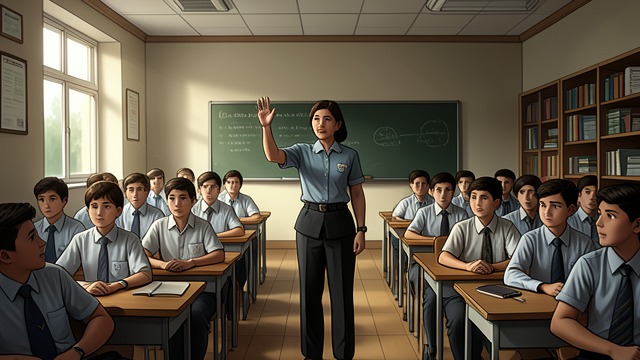
The School’s Ideal
The collective body
Instructors demand that cadets become identical instruments of national purpose, trained to move together and suppress hesitation.
A manufactured virtue
The school presents obedience and aggression as courage, while treating individuality as weakness.
Werner’s hunger to belong makes the ideology attractive before he fully understands its consequences.
The First Weakness Test
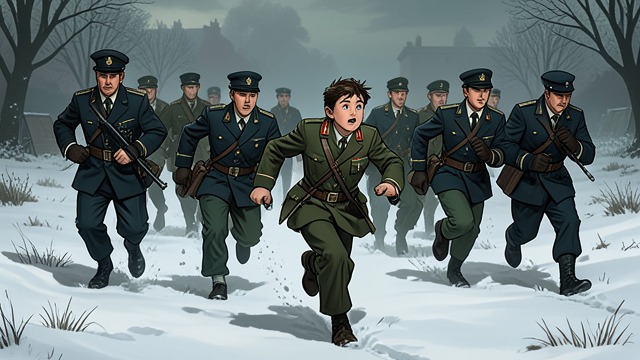
The First Weakness Test
A staged chase
Bastian orders cadets to hunt a boy designated as the weakest. The exercise converts cruelty into an authorized group ritual.
Werner’s participation
Werner runs with the pack while questioning what will happen if they catch the boy. His unease does not yet become action.
The test shows how institutions distribute responsibility until violence feels ordinary.
Frederick Refuses
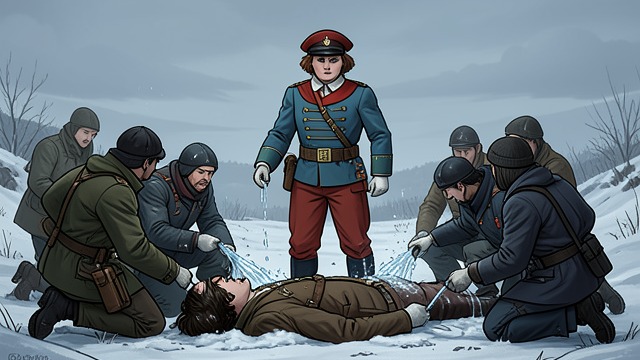
Frederick Refuses
An imposed spectacle
Cadets are ordered to throw water onto a bound prisoner in freezing weather. Frederick refuses to participate, pouring his water onto the ground.
The price of conscience
The refusal exposes Frederick to punishment and reminds Werner that moral action is possible even inside coercive systems.
His courage is quiet, but its consequences are severe.
A System Without Mercy
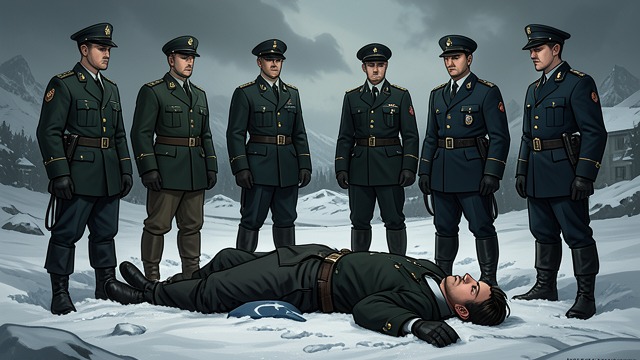
A System Without Mercy
Death normalized
The prisoner is left outside in the cold, and the cadets are made to participate in his ordeal. His body later becomes another object the school handles without ceremony.
Werner’s recognition
Werner questions the lack of decency but receives no useful answer. The institution calls cruelty order and treats compassion as disruption.
The episode makes the moral language of Schulpforta increasingly difficult for him to believe.
The Cost of Looking Away
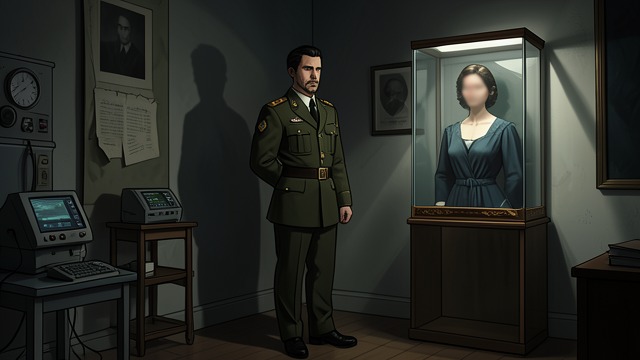
The Cost of Looking Away
Repeated memory
Werner continues to remember Frederick’s beating and later sees the same obedient passivity in his own conduct as a military technician.
A belated choice
When Marie-Laure is threatened, Werner finally acts rather than wait for authority to define the situation.
The novel does not equate one rescue with redemption; it presents moral change as possible but incomplete.
1940, Werner’s first weeks at Schulpforta
Autumn 1940, during Bastian’s field exercise
Winter 1941, during the freezing ordeal
1941, after the prisoner dies
1942 to 1944, after Frederick leaves school
